

By Seacoast Septic & Plumbing | Serving Palm Beach, Broward & Miami-Dade Counties for Over 60 Years
If you’re a property manager, facility manager, HOA board member, commercial building owner, or municipality, your lift station is one of the hardest-working systems on your property. Yet, it’s also one of the most overlooked—until something goes wrong.
A lift station failure can result in wastewater backups, unpleasant odors, business interruptions, emergency repair costs, and even environmental concerns. The good news? Most lift station problems don’t happen overnight. Your system usually gives warning signs long before a complete failure.
At Seacoast Septic & Plumbing, we’ve spent more than 60 years helping commercial properties throughout South Florida maintain reliable wastewater systems. Here are ten warning signs that your lift station may need professional attention.
1. Your Lift Station Alarm Is Sounding
A high-water alarm is your lift station’s way of telling you that something isn’t operating properly. This could be caused by a failed pump, electrical issue, clogged piping, or malfunctioning float switch.
Don’t ignore the alarm. The sooner the problem is diagnosed, the better your chances of preventing an overflow.
Control panel with alarm system.
2. Unpleasant Sewage Odors
If you notice persistent sewer odors near your lift station, it’s often a sign that wastewater isn’t moving through the system as it should.
Common causes include:
- Grease buildup
- Debris accumulation
- Pump failure
- Poor ventilation
- Extended wastewater retention
Odors are more than an inconvenience—they can indicate a developing mechanical issue.
3. Pumps Running Constantly
A healthy lift station cycles on and off throughout the day based on wastewater demand.
If your pumps seem to run continuously, it may indicate:
- A failing check valve
- Float switch problems
- Pump wear
- A blockage in the force main
Continuous operation increases wear on equipment and may lead to premature failure.
4. Frequent Breaker Trips
Electrical problems should never be ignored.
Repeated breaker trips can indicate:
- Motor problems
- Wiring issues
- Moisture intrusion
- Overloaded pumps
Professional troubleshooting can identify the source before it becomes a larger repair.
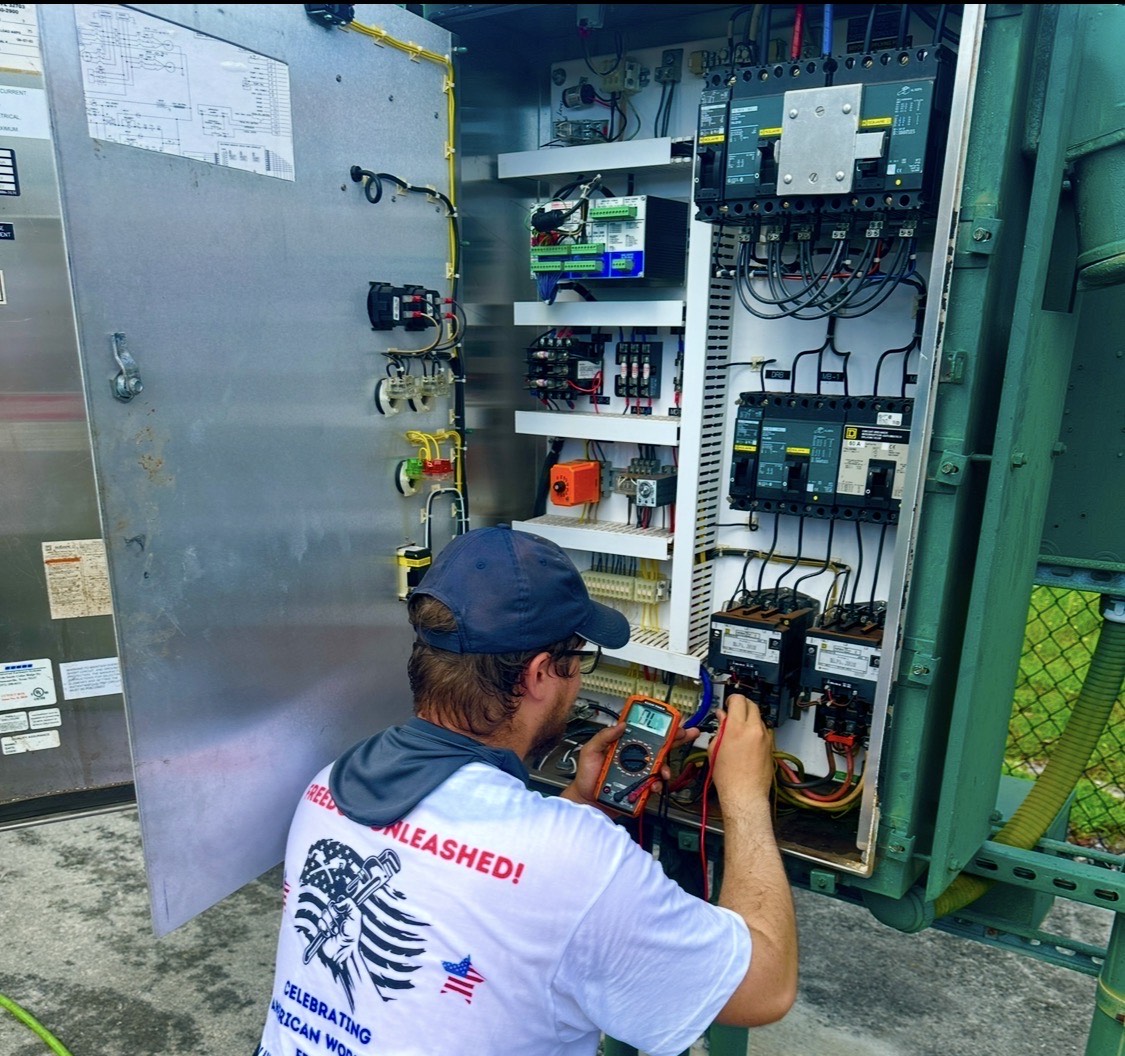
New electrical control panel.
5. Slow Drainage Throughout the Property
Multiple slow drains in a commercial building may point to a lift station issue rather than a simple plumbing blockage.
If wastewater cannot be pumped away efficiently, the entire drainage system may be affected.
6. Visible Corrosion or Equipment Wear
South Florida’s heat, humidity, and wastewater environment can be extremely hard on lift station components.
Routine inspections help identify:
- Rust
- Corrosion
- Damaged piping
- Worn valves
- Aging pumps
Replacing worn components early often prevents much larger repairs later.
7. High Energy Bills
A lift station that’s working harder than necessary often consumes more electricity.
Failing motors, worn pumps, clogged impellers, or improperly functioning controls may all contribute to increased operating costs.
Preventive maintenance helps keep your system operating efficiently.
8. Wet Areas Around the Lift Station
Standing water or unusually wet ground near the lift station may indicate:
- Leaking piping
- Failing seals
- Basin issues
- Overflow conditions
Prompt repairs help protect both your property and the surrounding environment.
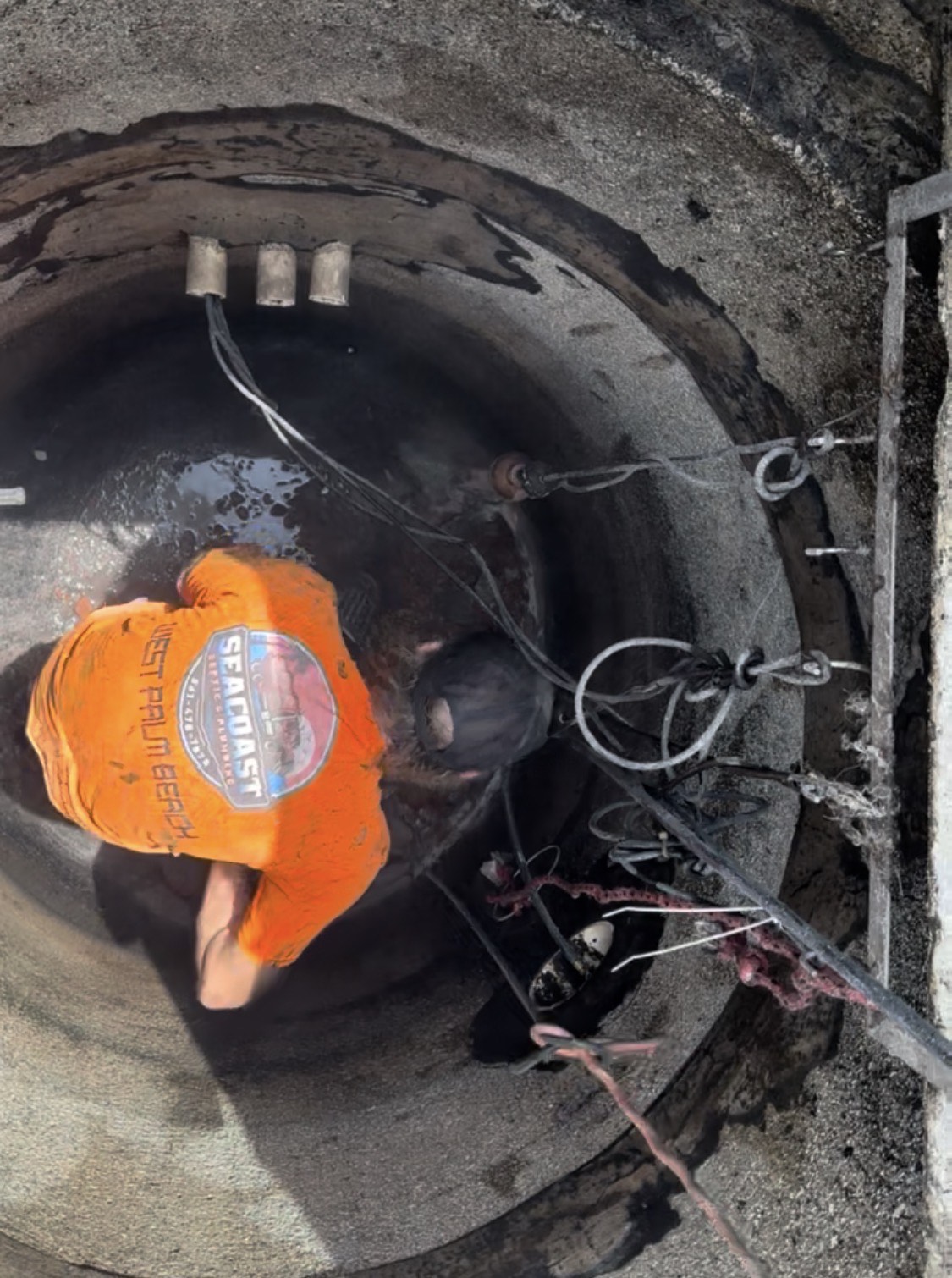
Technician inspecting the lift station.
9. Excessive Grease, Debris, or Wipes
One of the most common causes of lift station problems is material that shouldn’t be entering the wastewater system.
Items such as:
- “Flushable” wipes
- Paper towels
- Grease
- Cooking oil
- Rags
- Hygiene products
can clog pumps and reduce system performance.
Property managers can help reduce these issues by educating tenants and scheduling regular maintenance.
10. It’s Been More Than a Year Since Your Last Inspection
One of the biggest warning signs isn’t mechanical—it’s simply waiting too long between inspections.
Routine preventive maintenance allows technicians to identify small problems before they become expensive emergencies.
A professional maintenance visit typically includes:
- Pump inspection
- Float testing
- Control panel evaluation
- Valve inspection
- Wet well inspection
- Cleaning recommendations
- Performance testing
Did You Know?
A busy commercial lift station may cycle hundreds of times every day, depending on the property’s wastewater demand. Every cycle places normal wear on pumps, motors, float switches, and electrical components, making routine maintenance essential for long-term reliability.
Property Manager Tip
Emergency repairs are almost always more expensive than preventive maintenance.
Scheduling routine inspections can help:
- Reduce unexpected downtime
- Extend equipment life
- Lower repair costs
- Protect tenants and customers
- Minimize operational disruptions
A proactive maintenance plan is one of the best ways to protect your investment.
Why Choose Seacoast Septic & Plumbing?
For more than 60 years, Seacoast Septic & Plumbing has provided reliable commercial wastewater and plumbing services throughout Palm Beach, Broward, and Miami-Dade Counties.
Our experienced technicians specialize in:
- Commercial Lift Station Maintenance
- Lift Station Repairs
- Lift Station Installations
- Pump Replacement
- Control Panel Upgrades
- Emergency Lift Station Service
- Preventive Maintenance Programs
Whether you manage a single commercial property or an entire portfolio, we’re committed to helping you keep your wastewater systems operating safely and efficiently.
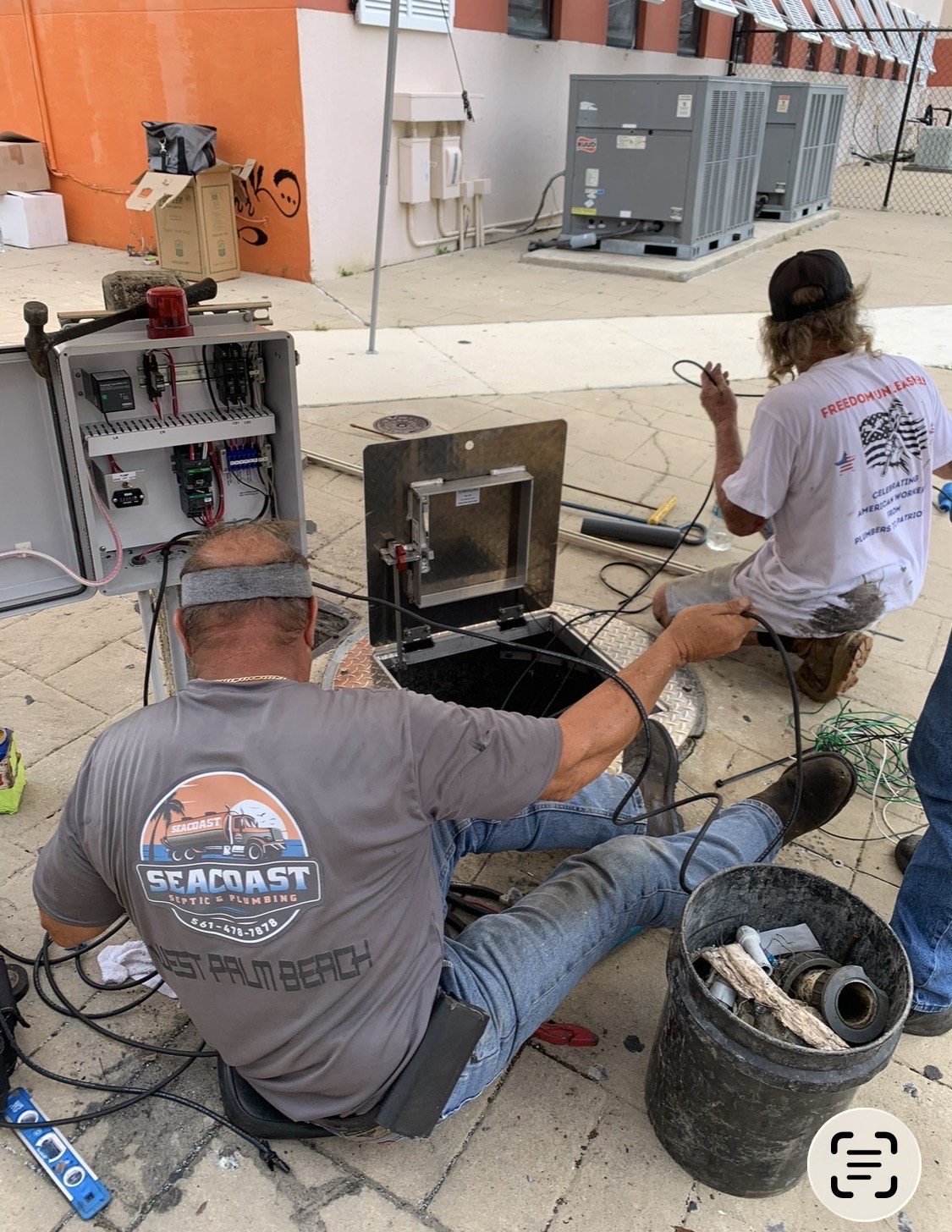
Your team working on the lift station.
Need Commercial Lift Station Service?
Don’t wait for an emergency.
Whether you need routine maintenance, a system inspection, emergency repairs, or a complete lift station installation, the team at Seacoast Septic & Plumbing is here to help.
Contact us today to schedule your commercial lift station inspection and keep your system operating at peak performance.